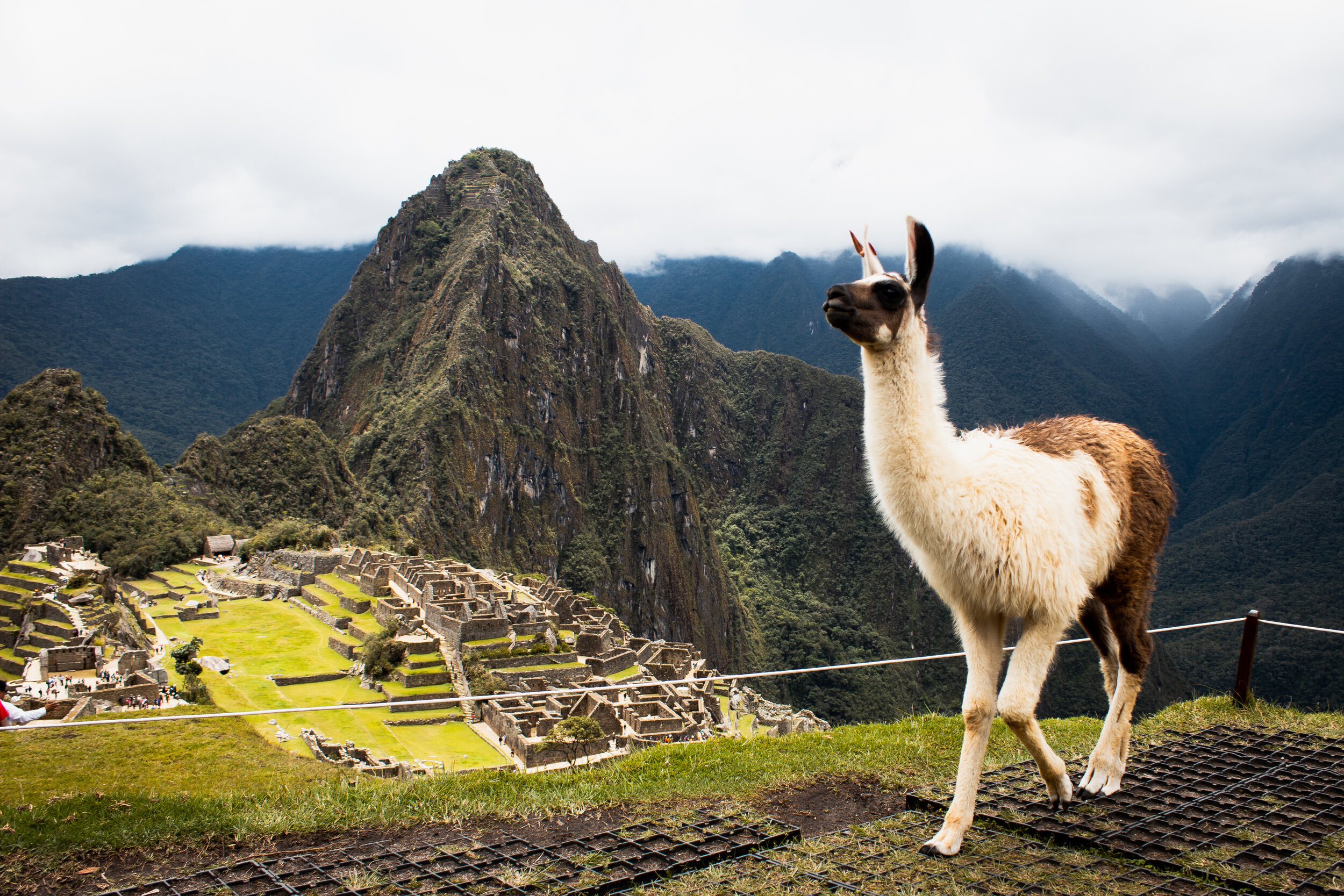
Llamas
Llamas are the perfect companion for a walk in the mountains! Originally domesticated by the indigenous llama herders of the rugged Andes mountains, they have been used as pack animals for millennia. Llamas are environmentally low-impact due to their browsing habits, thoroughly-processed droppings, and two-toed padded feet; these pack animals exemplify the “Leave No Trace” wilderness ethic. Sauntering at a more comfortable pace, they remind us to slow down as well. Their keen senses of smell, hearing, and sight encourage us tune into our surroundings and often direct us to spot other wildlife. On overnight trips, a mature llama can comfortably carry around 70 pounds, giving participants the ability to get out into the backcountry without being encumbered by a heavy pack.
Read more about the impacts of llamas as trail companions here.


Llamas and Humans
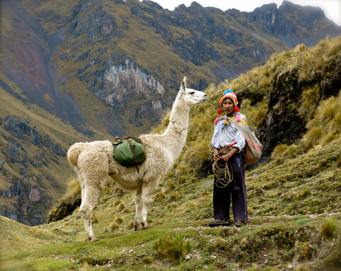
Llamas are a member of the camelid family, and one of the oldest domesticated animals. The Quechua people of the Andes consider the llama sacred, calling them “Silent Brother,” and they are the second most depicted form in Andean art after the sun. In fact, the word “llama” comes from the Quechua language, along with other loan-words like jerky, condor, and cacao. Even in contemporary Andean culture, a person’s wealth may be measured by the number of llamas in their herd.

Southern States Llama Association (SSLA) offers continuing education opportunities and community events. We are happy to be a member of this organization.

We are fortunate to have started handling our llamas early with the gentle approach of CAMELIDynamics. As a member of the guild, we continue to learn how to best work alongside our llamas.